

Hauraki Naturally
INSPIRING FREEDOM


The "Pure" Frontier: Inside New Zealand’s Growing 'Nakation' Economy
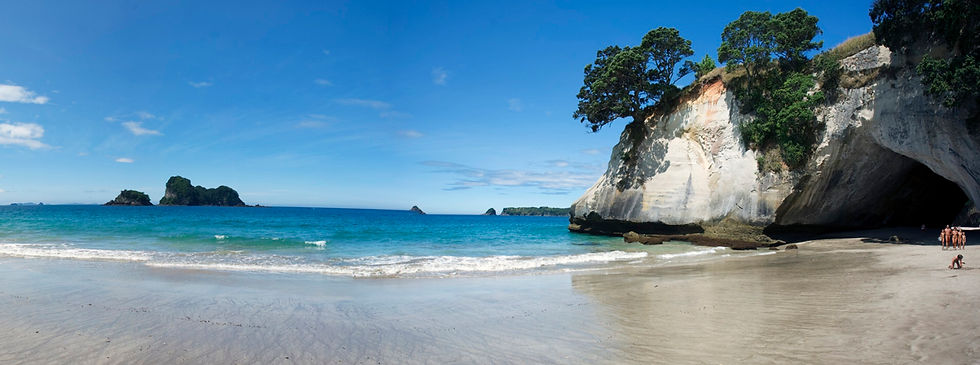
The "Pure" Frontier: A naturist family explores the iconic archway at Cathedral Cove, Coromandel Peninsula

by Andrew Cook (Rok)
9 May 2026
From fringe subculture to multi-billion-dollar niche: How New Zealand's 'Status Quo Plus' laws are turning the 'Pure' brand into a premier global destination for high-value clothes-free tourism.
As the first frosts of early winter settle across New Zealand, a quiet revolution is taking place in the planning rooms of the nation’s tourism sector. While most Kiwis are currently rugging up, the global travel industry is already looking ahead to the 2026/27 southern hemisphere summer. The projected breakout trend? The "Nakation" — clothing-optional vacations that are no longer a fringe subculture but a multi-billion-dollar global niche.
New Zealand is increasingly positioned as a premier destination for those seeking to shed more than just their daily stressors. Unlike the high-octane "lifestyle" resorts of the Caribbean, the New Zealand movement is firmly rooted in social naturism: a philosophy centered on body positivity, mental well-being, and a raw, sensory connection to the environment.
The Legal Edge: A "Common Law" Paradise
The primary driver behind New Zealand’s appeal to international "nakationers" isn't a government marketing campaign, but our distinctive legal framework. While many countries rely on rigid, government-mandated "nude zones," New Zealand operates on a principle of customary freedom.

The legal bedrock of the industry is found in the Summary Offences Act 1981 and the landmark Ceramalus and Lowe rulings. In these cases, the courts established that "simple nakedness" is not inherently offensive. The judicial distinction noted that while nudity in a suburban street might cause alarm, the beach is a place where nudity is "known to occur" and is therefore socially permissible.
"In New Zealand, you don't need a permit from the council to be naked on a beach," says one local advocate. "You just need common sense and respect." This "de facto" legality means that, provided there is no lewd intent, almost any beach or riverbed can serve as a clothing-optional destination — a level of freedom that is becoming a major drawcard for high-value European and American tourists.
The Economic Opportunity: From Camping to Qualmark
The economic footprint of naturism in New Zealand is larger than many realize. From the Auckland Sun Club in the north to Pineglades in Canterbury, the country boasts a network of 'landed' clubs and commercial resorts that, with a modus-operandi rethink, could cater to thousands more visitors annually.
Currently, many established clubs operate under an antiquated traditional membership model that can be a barrier to the modern traveller. Strict requirements for INF-FNI international cards and occasionally restrictive visiting rules mean that even the most eager 'nakationer' can find themselves locked out. For New Zealand to truly capture this global wave, the sector may need to pivot from a 'members-only' mindset to a more inclusive, tourism-friendly professional standard.
High-profile recognition has already begun. Katikati Naturist Park in the Bay of Plenty previously secured a New Zealand Tourism Industry Award, signaling that the sector can meet the same professional standards as mainstream holiday parks. Leading venues like Katikati and Mapua Leisure Park have achieved Qualmark accreditation — the gold standard for New Zealand tourism. While they currently represent the accredited vanguard, their success offers 'nakationers' a blueprint of security and service that rivals traditional luxury lodges, proving that social naturism and high-end tourism are no longer mutually exclusive.
Industry analysts suggest that naturists are "high-value" tourists. They tend to stay longer, seek out regional areas often bypassed by the "bus-tour" demographics, and have a deep vested interest in environmental conservation, aligning perfectly with the government’s "100% Pure" and "Regenerative Tourism" goals.
The "Status Quo Plus" Strategy
While proponents in other countries lobby for official "sign-posted" nude beaches, New Zealand’s leading advocacy groups — such as Free Beaches NZ Inc. and Hauraki Naturally — take a different path: the "Status Quo Plus" approach.
The reasoning is strategic: if a council officially designates a specific area as "clothing optional," it inadvertently implies that nudity is prohibited everywhere else. To avoid this "ghettoisation," these groups work to protect existing broad freedoms through:
Institutional Education: Working with the New Zealand Police and local councils to ensure they understand the Ceramalus and other case-law precedents.
The Beach Ambassador Program: Run by Free Beaches NZ, volunteers monitor popular customary-use beaches, acting as a bridge between the naturist community and the general public.
Digital Mapping: Instead of physical signs on the sand, these groups maintain comprehensive online directories, allowing international travellers to find "safe" spots like Opoutere Beach or Breaker Bay while keeping their experience discreet for the wider public.
Social Drivers: Body Positivity in a Digital Age

The surge in "nakations" is also a response to the modern "perfection" crisis. Clothing-optional organizations emphasise that social nudity provides a vital "reality check" against the airbrushed images of social media.
"Without the façade of clothing, people see each other as equals. Societal status disappears and you are accepted as you are, no matter whom you are or what you look like," explains a Hauraki Naturally spokesperson. "Bodies come in all shapes and sizes, scars and birth defects, but in a clothes-free environment, everyone is accepted without prejudice. There is no need to worry about how your body compares with someone else’s."
This focus on mental health has seen an uptick in interest from younger generations, particularly "eco-tourists" who view clothing-optional hiking and swimming as the ultimate expression of sustainable, low-impact travel.
The Future of the "Naked" Brand

As New Zealand looks toward the 2026/27 summer, the "nakation" represents a low-cost, high-return sector. The challenge for the future lies in "passive recognition" — ensuring that tourism authorities include these businesses and clothing-optional enterprises in wellness marketing and that the legal rights of those who prefer to shed their clothes are understood by all levels of government.
For the international traveller looking to truly disconnect, New Zealand offers something rare: a place where the law trusts the citizen, and where the "Pure" brand can be experienced in its most literal form.
