

Hauraki Naturally
INSPIRING FREEDOM


The Pūkorokoro Postscript: Direct Action Defeats Bureaucratic Inertia on the Coast

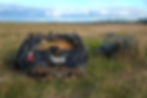
The Staging Ground: The mangled chassis of the extracted Ford Escape sitting on dry ground adjacent to the Hauraki Rail Trail cycleway, safely removed from the Pūkorokoro tidal mudflats while awaiting final trailer clearance by Department of Conservation rangers next week.

Andrew Cook (Rok)
2 Jun 2026
How the successful extraction of the Miranda mudflat car wreck delivers a definitive victory for coastal conservation and active community stewardship.
The environmental standoff that has threatened the delicate mudflats of the Pūkorokoro coastline for months has officially concluded with a massive, grassroots victory for ecological safety. Following an intensive investigative campaign by The Naked Truth that exposed systemic operational delays between the Department of Conservation (DoC) contractors and the Waikato Regional Council, the state was prompted to execute its high-traction 14-ton excavator recovery plan with urgency. The battered, structurally destroyed Ford Escape SUV (registration DKA807) has been successfully dragged from the tidal mud, neutralizing a toxic time bomb that sat directly within a world-class migratory bird sanctuary.
Yet, the true victory lies not only in DoC's eventual deployment of heavy machinery, but in the relentless, boots-on-the-ground stewardship demonstrated by the local clothing-optional community.
The Forensic Demolition: A Landscape Liberated
Field verification inspections conducted along the coastline this week reveal the extreme physical toll the Firth of Thames environment inflicted on the vehicle before its extraction. The recovered wreck now sits inland, safely positioned away from the tidal footprint among localized scrap near the public cycleway. The chassis is completely crushed, the roof structure is collapsed by the weight of successive high tides, and the body panels are thoroughly coated in marine silt and rust.
With the car wreck lifted from the shellbank and secured on dry ground, the immediate threat of oil, fuel, and heavy metal contamination leaching into the surrounding mangrove ecosystem and the Robert Findlay Wildlife Reserve has dropped to near zero.

However, the initial automated mechanical recovery executed by DoC's contractors left a trail of secondary debris scattered across the fragile reserve footprint. Large, waterlogged vehicle components, shattered shards of industrial plastic body panels, and a heavy-duty tow strop tying the vehicle to the protective mangrove roots remained abandoned in the mud — threatening local shorebirds and wildlife with plastic ingestion and entanglement risks.

Field Stewardship: Closing the Safeguarding Gap
Recognizing that administrative timelines rarely match the immediate needs of an active ecosystem, local advocates stepped directly into the vacuum. During a low-tide environmental inspection, The Naked Truth investigators executed a manual sweeping operation across the shellbanks, physically hauling out the heavy, waterlogged plastic frames, metallic car components, and abandoned strops left behind by the recovery team.
This hands-on community patrol caught the immediate attention of DoC authorities. In an official correspondence dispatched to the newsroom today, DoC Hauraki spokesperson Ken Brown confirmed that state rangers are now moving to finish the final cleanup phase. "Sam had one of his guys drop in last week," Brown reported. "We bundled some of its broken bits back inside and I'm going to check at low tide to see what else is left there — thanks for collecting bits, some of those waterlogged scraps were super heavy."
DoC has confirmed that during a scheduled pampas spraying operation in the reserve next week, rangers will deploy an industrial trailer to permanently remove the ugly scrap pile from the cycleway margin. Our team has already supplied DoC with precise spatial coordinates identifying the remaining loose foam rubber fragments dropped by the digger near the localized predator traps, alongside a standing offer to help manually load the trailer.
The Newsroom Verdict: Active Sovereignty in Action
The successful resolution of the Pūkorokoro standoff is a clear, straightforward example of why our community’s Advocacy Pillar matters. When local authorities enter cycles of procrastination and administrative inertia, it is the free-range clothing-optional community that actively steps up to patrol, document, and physically protect the natural sanctuaries of New Zealand.
From uncovering the initial threat during a regular four-kilometre coastline patrol to forcing a 14-ton mechanical intervention and personally packing out the remaining toxic debris, our actions have insulated this vital habitat from ecological harm. We have proven that clothes-free practitioners are not a friction point on our coastlines — we are its most dedicated, vigilant guardians. The tide has officially turned, the mudflats are secure, and the integrity of the Pūkorokoro sanctuary has been successfully reclaimed for generations of migratory birds to come.
